


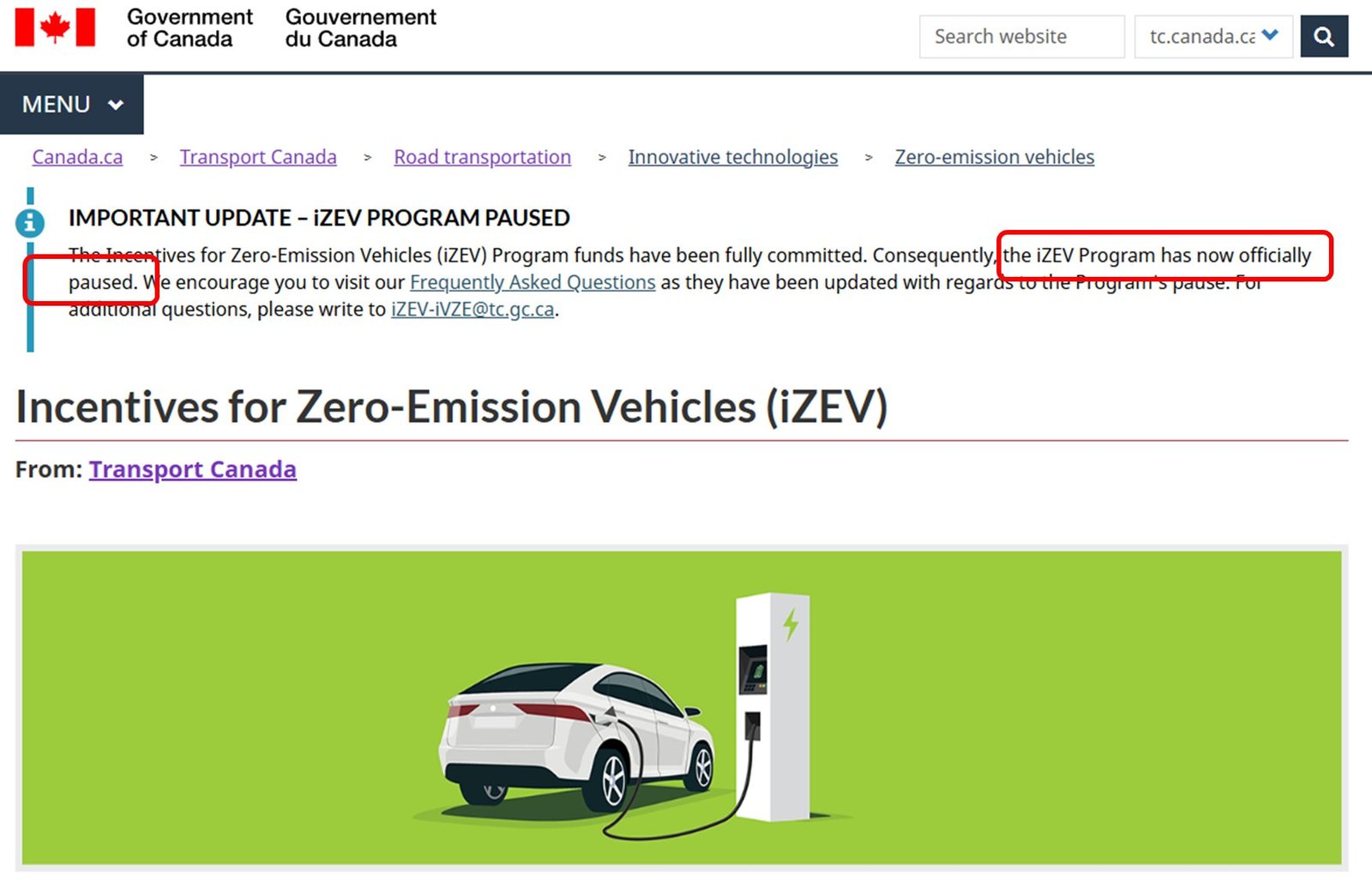
Ottawa-Canada’s federal fund for electric vehicle (EV) rebates, known as the Incentives for Zero-Emission Vehicles (iZEV) program, has officially run out of money, marking an abrupt end to federal financial assistance for regular Canadians looking to purchase EVs. On January 10, the government announced $71 million remained in the fund and expected it to last until March 2025. However, just three days later, officials revealed the fund had been fully depleted.
The iZEV program was initially slated to expire in March 2025 or once the allocated funds were exhausted. While the federal rebate for individual EV buyers has ended, a separate program providing incentives for businesses purchasing zero-emission trucks will continue until March 2026 or until its fund runs out.
Adding to the challenges, Quebec recently announced it would reduce its EV rebate from $7,000 to $4,000 and suspend its provincial program entirely by February 2025 due to overwhelming demand in 2024. Similarly, British Columbia narrowed eligibility requirements for its $4,000 CleanBC EV rebate program in June 2024.
Economists emphasize the significant role of tax credits and subsidies in driving EV adoption. Without financial incentives, experts warn that EV sales could stagnate, slowing Canada’s progress toward its environmental targets.
The situation is mirrored in the U.S., where former President Donald Trump has signaled plans to eliminate EV tax credits of up to $7,500 if re-elected.
This sudden halt in federal EV rebates raises questions about the country’s long-term commitment to promoting sustainable transportation and meeting its climate goals.